

The Science Behind Our Artificial Nest
We upcycled discarded PET plastic bottles and reinforced it with hemp fibers into an artificial nest for hornbills.
Existing artificial nests have limitations.

Wood Artificial Nests
-
Short lifespan of 2-3 years
-
Construction requires cutting down trees -> contributes to deforestation

Earthern Jar Artificial Nests
-
Dimensions unsuitable for hornbill nesting behavior and hinders the hornbill chicks from learning to fly

Fiberglass Artificial Nests
-
Safety concerns from fiberglass, as once degrades and can become irritating for the birds
Image credit: Thailand Hornbill Research Foundation.
What an artificial nest must do
Before starting our experiments, we identified six requirements our artificial nests needed to meet.
Safe for hornbills
Artificial nest materials must not harm hornbills or their natural behaviors.
Suitable Internal Conditions
Maintain appropriate temperature and humidity for hornbill nesting.
Secure entrance perch
A perching place should be attached to the outside of the entrance so the male can easily land and feed his family.
Appropriate nest dimensions
The artificial nest must have sufficient space for the female to molt her feathers, incubate her eggs, and allow chicks to practice wing-flapping before fledging.
Durable in tropical environments
The nest must withstand prolonged exposure to sunlight, rain, humidity, and other tropical weather conditions.
Sustainable and deforestation-free
Materials should minimize environmental impact and eliminate the need to cut down trees.
The Core Idea
Our artificial nest is engineered using a composite material. A composite material consists of two parts: a matrix and a reinforcing fiber. The matrix surrounds and holds the fiber in place; the fiber enhances the material's mechanical strength. Their synergy creates a material that is stronger and more durable than either part alone.
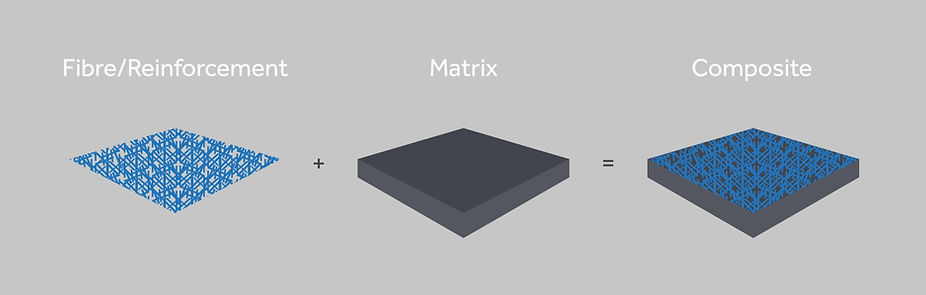
Now, our question was: what should the matrix be made of? What fiber is suited to reinforce it? And once selected, will the final artificial nest perform well under real-world forest conditions?
The Matrix
Upcycling a plastic bottle is not as simple as melting a bottle down
PET bottles are thermoplastics, meaning that when exposed to heat, it reshapes. This process is called mechanical recycling. Although convenient, repeatedly using heat to change shape will degrade the polymer, reducing durability and mechanical properties. Concurrently, when the object is exposed to sunlight or high temperatures, it will distort. The artificial nest cannot risk these thermal and structural failures.
So, we chose a sophisticated route: chemical upcycling. Through chemical upcycling, we enhance PET's properties, particularly strength and durability.
Mechanical Recycling: Melt & remold
Same molecule, degraded a little each time
-
Polymer chains shorten after every melt
-
Durability and mechanical strength fall
-
Still a thermoplastic → objects distort when exposed to heat
Chemical Upcycling: Our method
Rebuild the molecule, stronger than before
-
Durability and mechanical strength increase
-
Gives room to add biobased content, lowering carbon footprint
-
Becomes a permanent thermoset → built to last
We couldn’t just reshape the plastic; we had to rebuild it at the molecular level.
The Process
Glycolysis
Reaction Principle: Polyethylene Terephthalate + Polyols + Zinc acetate → Bis(2-hydroxyalkyl)terephthalate (BHAT)
Result: We determined the optimum conditions for glycolysis of PET with polyols to be 190°C-220°C for 12 hours.

Esterification
Reaction Principle: BHAT + Polyacids → Unsaturated polyester resin + Water
Result: The optimal esterification temperature is 215°C-220°C to ensure that the reaction between BHAT and the polyacids proceed to completion, yielding an unsaturated polyester resin.

The Fiber
The reinforcing fiber improves the composite's mechanical strength. We evaluated 7 natural fibers: pineapple, banana, sisal, water hyacinth, coconut, jute, and hemp fiber to identify the material best suited for the composite material. Each candidate underwent three mechanical evaluations before the optimal fiber was selected.
The Process
Wetting test: Can the fiber bond with resin to form a composite?
We tested pineapple, banana, sisal, water hyacinth, coconut, jute, and hemp fiber for their abilities to absorb and bond with the binding resin, which is a prerequisite for forming a strong and durable composite.
Result: Pineapple fiber, banana fiber, sisal fiber, water hyacinth, and hemp fiber exhibited satisfactory wetting properties and were carried forward for mechanical testing.

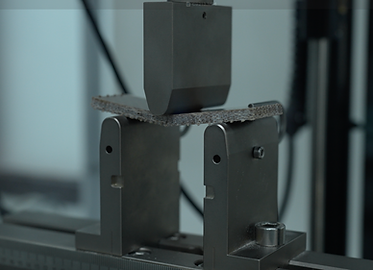
Three-point bending test: Can the composite resist bending under load?
We applied increasing force to composite samples of each fiber type until deformation occurred and measured their flexural strength, including the composite material's resistance to bending.
Results: Hemp fiber and pineapple fiber demonstrated greater flexural strength relative to the other natural fibers. Both were carried forward.
Charpy Impact test: Can the composite withstand sudden impact without fracturing?
In the forest, the artificial nest must withstand impact from hornbills and the surrounding environment. The Charpy test strikes composite samples with a calibrated pendulum to measure impact resistance.
Results: Hemp fiber composites showed impact resistance comparable to walnut wood and superior to pine wood. Pineapple fiber did not perform as well under impact.
Overall fiber result: Hemp fiber was selected. It was the only material to meet the required mechanical criteria: flexural strength, impact resistance, and wettability. We then optimized the number of hemp fiber layers to maximize strength without adding unnecessary weight.
Artificial Nest Construction
After determining that the matrix and fibers would be upcycled PET plastic bottles and hemp fiber, respectively, we fabricated a composite by crosslinking the matrix and fiber with chemical initiators and promoters. This approach further enhanced the strength and durability of the artificial nest.
Subsequently, we constructed our first artificial nest prototype. To validate this, we conducted two experiments:
Weathering test: Will it last?
We exposed the hemp fiber composite sample to accelerated weathering conditions simulating prolonged outdoor exposure. This included sunlight and UV radiation, rain cycling, and humidity.
Results: The hemp fiber composite exhibited no deformation after 4,000 hours of accelerated weathering, indicating a projected lifespan of over 10 years.

Ventilation test: Is it suitable for hornbill nesting?
We measured internal temperature, heat accumulation, and humidity inside the prototype over time and compared our results directly with those of a standard wooden nest box.
Results: The difference in nest temperature between wooden and composite nests was 1-2 °C. Internal humidity levels remained within acceptable ranges throughout. Our results were reviewed and validated by the Thailand Hornbill Research Foundation as suitable for hornbill nesting.
Final Design Review
Our design process began with six engineering requirements for an artificial hornbill nest. The completed prototype was evaluated against each requirement, and the final design successfully met all six design objectives.
Design Requirement
Final Design
Safe for hornbills
✓ Composite material and artificial nest validated by the Thailand Hornbill Research Foundation
Suitable internal conditions
✓ Internal temperature differed by only 1–2°C from wooden nests
Appropriate nest dimensions
✓ Dimensions optimized for hornbill nesting behavior
Secure entrance perch
✓ Supports natural feeding behavior
Sustainable & deforestation-free
✓ Upcycled PET bottles reinforced with hemp fiber
